
Small-Format Wine in Australia: Decoding the Consumer
Small-format wine in Australia is gaining attention as consumers look for formats that fit changing lifestyles, convenience needs, and different drinking occasions. For a client looking to understand this segment more closely, the key question was not simply who buys 200–250 ml of wine, but why they choose it and how they use it.
At PrizmData, we conducted an online quantitative study among Australians who had purchased and consumed small-format wine within the previous month. The 20-minute survey explored usage occasions, purchase drivers, brand choice, attitudes, and unmet needs.
The results gave the client a clearer view of recent consumers and evidence to support product development, communication strategy, and category growth.
Why Small-Format Wine in Australia Needed Deeper Consumer Insight

The client’s business situation identified small-format wine, specifically 200–250 ml packs, as a growing segment within Australia’s off-premise channel.
But growth alone does not explain what is happening inside a category.
The client needed to understand:
- when consumers choose smaller wine formats
- what motivates the purchase
- which factors influence brand choice
- what barriers may limit consideration
- where consumers still see unmet needs
- which opportunities could support future category growth
Broader Australian wine trends also show why format-level research matters.
The Australian Institute of Health and Welfare reported that wine available for consumption declined from 95.3 million liters of pure alcohol in 2022–23 to 92 million liters in 2023–24.
At the same time, Wine Australia’s 2025 off-trade market insights highlighted a shift toward smaller social occasions and growing interest in single-serve spritzers. The report also noted continued attention to economical pack sizes and convenient formats. These observations do not measure the 200–250 ml wine segment directly, but they show why studying pack format and consumption occasion separately from the wider wine category can be valuable.
How We Used Quantitative Research to Study the Category

We chose quantitative research because the client needed measurable evidence from recent purchasers and consumers, rather than general opinions about wine.
The study used an online survey with a 20-minute questionnaire.
How We Reached Recent Buyers of Small-Format Wine in Australia
Respondents needed to have both purchased and consumed 200–250 ml small-format wine within the past month.
That screening requirement was important. Someone familiar with the format but who had not bought or consumed it recently would not provide the same evidence as an active category user.
| Study element | Research approach |
|---|---|
| Market | Australia |
| Category | Small-format wine, 200–250 ml |
| Qualification | Purchased and consumed within the past month |
| Method | Online quantitative study |
| Questionnaire length | 20 minutes |
| Quality approach | Targeted screening and research quality checks |
We screened respondents to reach the intended audience and applied quality checks to support reliable data.
The case study does not specify the final sample size, so we do not infer one.
What Did We Need to Understand About Consumer Behavior?
The study was designed around decisions the client could use.
Rather than asking only whether consumers liked the format, we examined how small-format wine fitted into actual purchase and consumption patterns.
| Research area | What the client needed to understand |
|---|---|
| Usage occasions | When consumers choose smaller wine formats |
| Purchase drivers | What motivates them to buy |
| Brand choice | What influences selection between brands |
| Consumer attitudes | How recent users think about the format |
| Barriers | What may prevent or limit purchase |
| Unmet needs | Where consumers still see gaps in the category |
This is where Consumer Behavior becomes particularly useful.
Pack size may be one visible part of the decision, but the research also needs to capture the occasion and motivation surrounding the purchase. A smaller format bought for one occasion may serve a very different need from a full-size bottle bought for another.
We did not assume what those motivations were before fieldwork. The survey was designed to measure them.
What the Study Delivered for the Client

The research provided the client with a clearer understanding of recent small-format wine consumers.
According to the project outcome, the study helped identify:
- key consumption occasions
- purchase drivers
- brand preferences
- unmet consumer needs
These findings gave the client a stronger evidence base for decisions around product development and communication strategy.
They also helped identify opportunities for category growth within the Australian market.
The important point is that the project did not rely on assumptions about convenience or changing lifestyles alone. We collected responses from people who had recently participated in the category and used those responses to understand how the format was actually being purchased and consumed.
How the Findings Supported Category Strategy
For the client, understanding recent purchasers created several practical areas for decision-making.
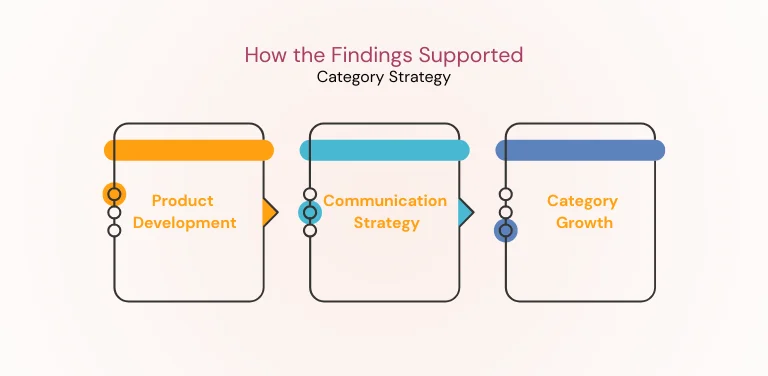
Product Development
Unmet needs and consumer attitudes can show where an existing offer may not fully match what buyers want.
The study gave the client evidence to identify product opportunities without assuming that every small-format consumer wanted the same thing.
Communication Strategy
Understanding purchase drivers and usage occasions can help a brand decide which parts of the proposition deserve greater emphasis.
The client could use the findings to develop communication around the needs and occasions identified through the research.
Category Growth
Looking at occasions alongside barriers can reveal where further category development may be possible.
The study gave the client a clearer basis for identifying those opportunities within the Australian market.
What Small-Format Wine in Australia Research Revealed
Researching Small-Format Wine in Australia required more than measuring awareness of a 200–250 ml pack. The client needed to understand the people already buying and consuming the format, the occasions behind those purchases, and the factors influencing their choices.
Through a targeted online study, PrizmData captured recent consumer experiences and translated them into evidence for product development, communication strategy, and category planning.
For emerging or changing categories, that direct view of consumer behavior can help businesses move from assumption to a clearer understanding of the market.
Frequently Asked Questions
Recent purchasers could provide current information about their usage occasions, purchase decisions, and brand choices. The study therefore screened for Australians who had purchased and consumed 200–250 ml wine within the previous month.
Quantitative Research allowed us to collect structured responses on purchase drivers, attitudes, brand preferences, and usage occasions. This gave the client measurable evidence to support category decisions.
Yes. Consumer behavior research can reveal how people use a category and what influences their choices. In this study, the findings helped the client identify unmet needs and opportunities relevant to future product development and category growth.