GCC UHT Dairy and Beverage Market: A Value Chain Analysis
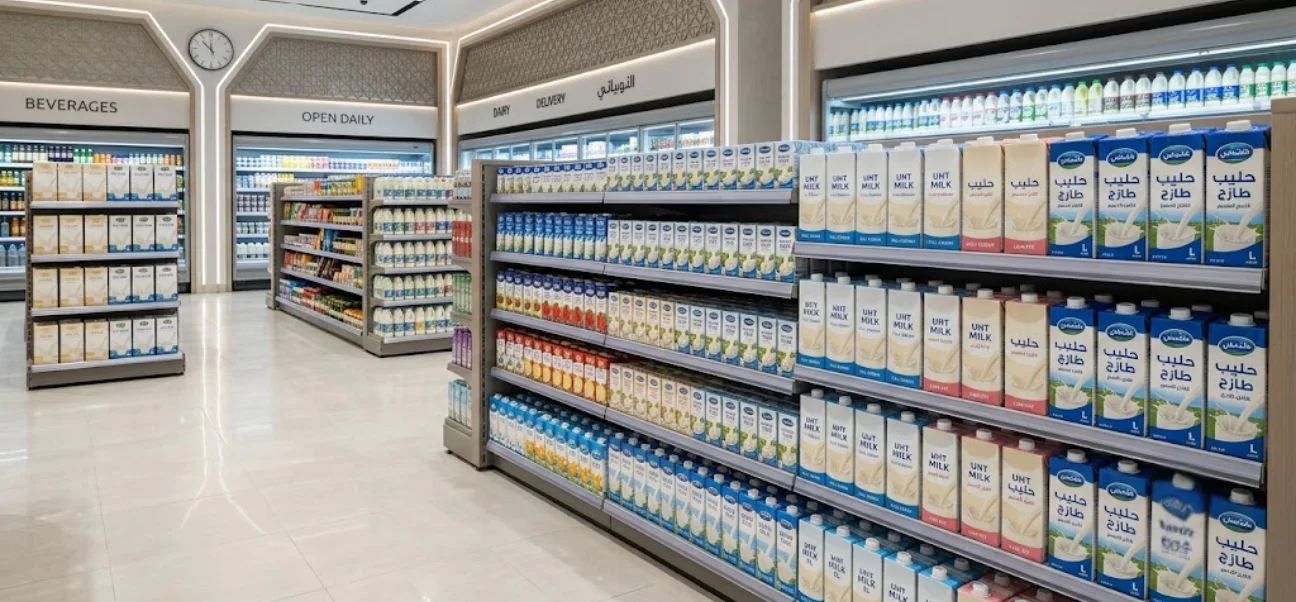
The GCC UHT dairy and beverage market is about more than just consumer demand. Market access is also driven by retailer demands, distributor capacity, pricing models, and relationships between businesses in the value chain.
A client required a better picture of this ecosystem across Qatar, Oman, and Bahrain, with UHT milk as the main focus and UHT juices and cream as secondary categories. To understand how the market worked from the perspective of the businesses directly involved in it, we conducted 25 in-depth stakeholder interviews in PrizmData.
The study provided the client with a 360-degree view of the value chain and more clarity on the evidence to plan for market entry and expansion.
Why This Dairy Market Research Needed a Value Chain View
The client wanted to identify growth opportunities while strengthening its competitive position across the GCC.
The challenge was that the market was being affected by multiple commercial factors simultaneously. Competition was fierce, retailer needs were shifting, and margins were tightening. On top of it, another layer of complexity was added by distribution networks.
For UHT products, route-to-market decisions deserve special attention. Aseptically packaged UHT milk can be stored for months before opening without refrigeration. This largely affects storage and distribution possibilities.
For UHT products, route-to-market decisions deserve special attention. Aseptically packaged UHT milk can be stored for months before opening without refrigeration. This largely affects storage and distribution possibilities.
To understand the opportunity properly, we needed insight into areas including:
- market size and growth trends
- competitive positioning
- retailer listing requirements
- pricing and margin expectations
- shelf-space allocation
- distributor networks
- procurement and logistics challenges
- regulatory requirements
- HORECA opportunities
- future category potential
The research covered the dairy market in Qatar, Oman, and Bahrain within the same study framework, giving the client a wider GCC perspective without treating every market as identical.
For instance, Oman’s National Centre for Statistics and Information reported that total dairy production reached around 252,000 tonnes in 2025, up 4.6% from 2024. This is one reason country-level conditions need to be considered within a wider regional assessment.
How We Assessed the GCC UHT Dairy and Beverage Market

We used qualitative research because the study required detailed input from people directly responsible for UHT categories.
What the GCC UHT Dairy and Beverage Market Study Covered
We completed 25 in-depth stakeholder interviews across the dairy market in Oman, Qatar, and Bahrain.
| Stakeholder group | Interviews | Profiles included |
|---|---|---|
| Retail decision-makers | 10 | Category managers, buyers, procurement heads, and modern trade representatives |
| Suppliers and distributors | 15 | Commercial heads, sales directors, brand managers, operations leaders, and strategy heads |
We screened every participant to confirm seniority and direct responsibility for UHT categories.
The interviews then explored how products move through the value chain. We examined pricing structures and retailer expectations, along with supply-chain challenges and market-entry barriers.
This was a B2B research study rather than direct consumer behavior research. We did not interview consumers for this project. Instead, we examined how senior retailers, suppliers, and distributors were experiencing changing demand patterns and category performance from inside the market.
What Did the Value Chain Analysis Reveal?
The research gave the client a broad view of how the UHT ecosystem was functioning across the three markets.
More importantly, it identified the commercial issues affecting growth.
| Area | What the study helped uncover |
|---|---|
| Market access | Barriers affecting entry into UHT categories |
| Retail | Expectations around listings and shelf-space acquisition |
| Pricing | Margin pressures across the value chain |
| Distribution | Bottlenecks and opportunities to improve coverage |
| Operations | Inventory management and logistics challenges |
| Regulation | Compliance requirements affecting the category |
| Channels | Partnership requirements and HORECA opportunities |
The client could therefore look beyond broad market demand and see where commercial friction existed between different parts of the value chain.
How the Research Supported Market Entry and Expansion

The outcome was not limited to a description of the market.
The findings helped the client refine its approach to market entry and expansion. They also provided evidence for improving retailer engagement and strengthening channel relationships.
The research supported decisions around:
- where distribution coverage needed attention
- which market-entry barriers required planning
- where whitespace opportunities could exist
- how retailer engagement could be improved
- which UHT categories warranted greater investment
For organizations considering market research in Oman, for example, this type of stakeholder-led approach can show how market access works in practice rather than relying only on top-level category figures.
The same principle applies when examining neighboring GCC markets. A regional opportunity may look attractive on paper, but retailer requirements or distribution conditions can change the commercial picture.
Why Stakeholder-Level Research Matters in the GCC Dairy Market

A value chain can look straightforward from the outside: supplier, distributor, retailer, and customer.
In practice, every stage contains commercial decisions.
A product may meet consumer demand but still face difficulty securing shelf space. A supplier may have a suitable portfolio but lack the distribution coverage needed for expansion. Pricing may look competitive until retailer margin expectations enter the calculation.
This is where dairy market research benefits from speaking directly with the people managing these decisions.
As a global market research company, PrizmData can bring different stakeholder perspectives into the same study. In this project, that meant understanding how retailers viewed the category while also examining the pressures facing suppliers and distributors.
The result was a more complete picture of where growth opportunities existed and what could prevent the client from reaching them.
Understanding the GCC UHT Dairy and Beverage Market From the Inside
The GCC UHT dairy and beverage market cannot be understood through market size or consumer demand alone. Businesses also need to know how retailers evaluate categories, where distribution becomes difficult and which commercial requirements influence market access.
By speaking with 25 senior stakeholders across the dairy market in Bahrain, Qatar, and Oman, we gave the client a detailed view of the UHT value chain and the barriers affecting growth.
At PrizmData, we use research like this to turn market complexity into evidence businesses can use when planning entry or expansion.
Frequently Asked Questions
Each group sees a different slice of the market. By comparing their perspectives, we can identify where expectations match and where the problems lie between product supply and retail access.
Yes. A value-chain study can be carried out in one market or across several countries. That’s a business decision in terms of scope and whether the client want a country-specific insight or a broader view of the region.
Consumer behavior research helps explain what buyers want or how they make choices. B2B research examines the commercial organizations responsible for bringing those products to market. Using either method, or combining them where needed, depends on the question the business is trying to answer.