
KSA Real Estate Sentiment: Are Buyers Pausing or Pivoting?
Saudi Arabia’s real estate market is still moving, but the way buyers behave has changed. People are not walking away from the market. They are just taking longer to decide, asking more questions, and being much more careful about where and when they put their money.
That shift matters. In a market shaped by Vision 2030, major infrastructure growth, and new housing opportunities, demand is still present. But demand alone does not always lead to action. Many buyers are interested, yet hesitant. They like the direction the market is heading in, but they want more reassurance before they commit.
So the real question is not whether KSA real estate is growing. It is whether buyers are pausing because they are unsure, or pivoting because their priorities have changed.
The Market is Still Active

It is easy to assume hesitation means weakness, but that is not always the case. In Saudi Arabia, there is still plenty supporting the property market.
The country is investing heavily in its future. New cities, housing programmes, giga-projects, and better infrastructure are all shaping how people think about real estate. For many buyers, the long-term story remains strong. They can see the bigger picture, and they know the market is not standing still.
A few things are still keeping confidence alive:
- Vision 2030 is continuing to reshape the Kingdom
- Housing access and homeownership remain national priorities
- Large-scale projects are creating long-term interest
- Population growth and urban development are keeping demand moving
So the market has not lost momentum. It has simply become more thoughtful.
Why Buyers Are Moving More Slowly

The main shift right now is in buyer psychology. 56% of consumers in KSA are spending less and delaying property decisions. People are still interested in property, but they are no longer rushing in just because the market feels promising.
A lot of buyers are asking themselves practical questions:
- Is this the right time to buy?
- Will this property really hold value?
- Is the location worth the price?
- Am I choosing the right size, layout, or payment plan?
- Should I wait a little longer and compare more options?
This is where Behavioural Research can be useful. It helps businesses understand how buyers respond to factors such as price, location, payment options, and changing market conditions.
This is not the behaviour of a buyer who has lost interest. This is the behaviour of someone who wants to feel more secure before making a big decision.
That is why hesitation in the current KSA real estate market should not be read as rejection. In many cases, it is just caution.
Also Read: From Spending to Selection: How Saudi Consumers Are Redefining Value
Pausing and Pivoting Are Not the Same Thing

These two behaviours look similar on the surface, but they mean different things.
A buyer who is pausing may still like the market, but does not yet feel ready. They may be waiting for better affordability, more clarity, or a stronger sense of timing.
A buyer who is pivoting is still active, but their priorities have changed. They may be looking at a different city, a different property type, or a different stage of development. Instead of stepping away, they are adjusting their approach.
That is an important difference.
In KSA real estate, this can show up in a few ways:
- Some buyers are shifting from larger homes to more practical units
- Some are moving towards better-located areas instead of larger spaces
- Some are looking more closely at lifestyle value, not just price
- Some are paying more attention to payment flexibility and long-term comfort
So rather than asking whether buyers are buying or not, it may be better to ask what kind of buyer they have become.
Different Buyer Groups Are Behaving Differently
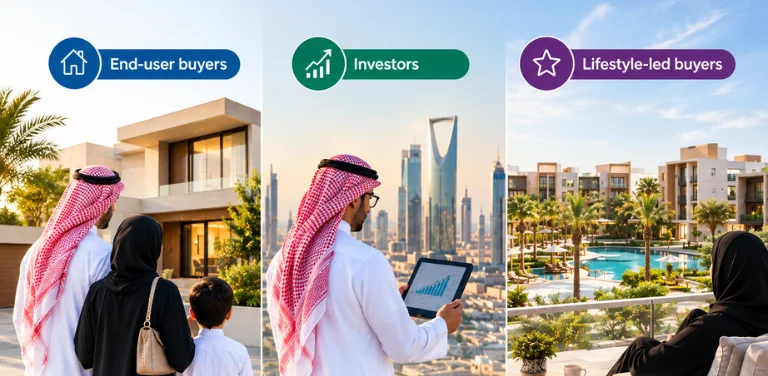
Not every buyer in Saudi Arabia is reacting in the same way. That is one of the most important things to understand.
End-user buyers
These are the people buying for their own use, often as a home for family life. They tend to be the most cautious when uncertainty rises. They care about affordability, location, convenience, and whether the property actually suits day-to-day living.
Investors
Investors usually stay active, but they become more selective. They are often looking at yield, resale potential, location strength, and long-term growth. They are not necessarily slowing down, but they are filtering more carefully.
Lifestyle-led buyers
This group is drawn to developments that offer more than just a home. They want a certain standard of living, a strong community feel, and a place that reflects their long-term plans. They may still be interested in buying, but they are more likely to choose projects that feel complete, well-positioned, and future-ready.
What Sentiment is Really Telling Us

If you only look at sales numbers, you might think the story is about volume. But buyer sentiment tells a deeper story.
This is where we incorporate market research. It helps businesses understand what buyers are thinking, what is influencing their decisions, and why some are delaying purchases while others are changing their preferences.
Sentiment helps explain why a buyer is interested but not yet committed. It shows whether people are feeling optimistic, cautious, or undecided. And in real estate, that matters a lot.
The current mood suggests that:
- Buyers still believe in the Saudi market
- They are just more careful with timing
- They want stronger reasons to act now
- They are thinking more about value, not just ambition
- They need reassurance before making a major purchase
A market can look healthy on the surface, while buyers underneath are becoming more selective. That is exactly why real estate brands need to keep reading the room, not just the numbers.
What Buyers Care About Now

The old approach to real estate marketing focused heavily on size, status, and future promise. That still matters to some extent, but it is no longer enough.
Today’s buyer wants clarity. They want to understand what they are getting and why it makes sense for them.
That usually means looking for:
- A good location
- Practical payment terms
- Quality construction
- Useful amenities
- Strong community planning
- Long-term value
- A property that feels right for their lifestyle
This is a much more grounded way of buying. It is less about hype and more about confidence.
What Developers and Marketers Should Pay Attention to
For developers, marketers, and investors, this shift should change the way the market is approached.
The message now needs to be less about urgency and more about trust.
That means focusing on:
- Clear, simple communication
- Honest positioning
- Real lifestyle benefits
- Strong neighbourhood value
- Flexibility in pricing or payment structure
- Evidence that the project fits current buyer needs
Competitive intelligence can also help developers understand how competing projects are positioning themselves, what buyers are responding to, and where gaps in the market may exist.
The brands that will do well are the ones that reduce uncertainty. Buyers are already interested. The challenge is helping them feel ready.
The Bigger Picture
So, are buyers pausing or pivoting? The honest answer is both. Some buyers are waiting for more certainty. Others are simply changing direction. They are still interested in Saudi real estate, but they are no longer buying on instinct alone. They want comfort, clarity, and confidence before they act.
That does not point to a weak market. It points to a more mature one. And that is why understanding sentiment matters so much. The market is still speaking. It is just speaking in a quieter, more careful way.